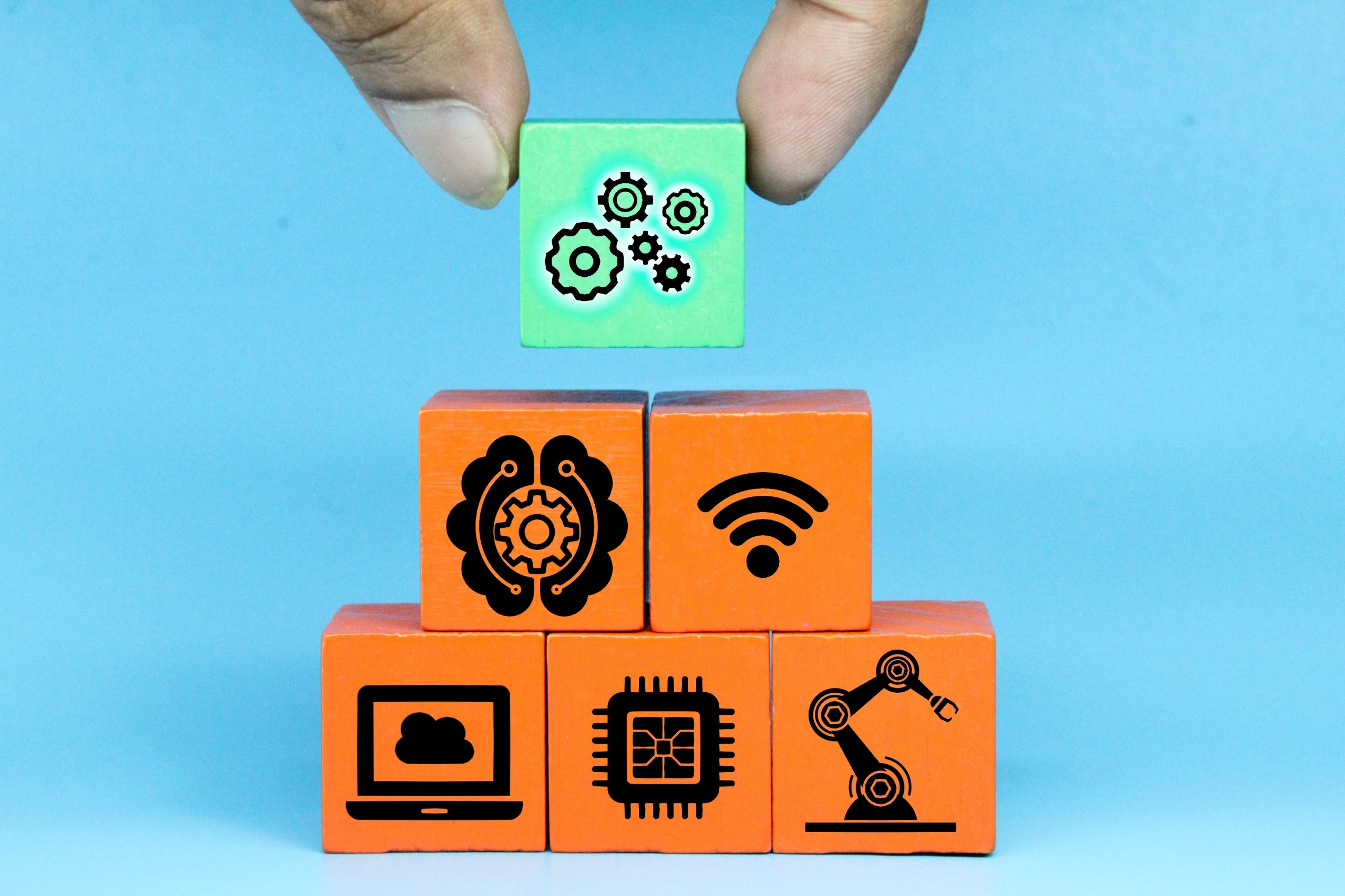
The Role of AI and Deep Learning in the Future of Professional Services
The Intelligence Multiplier
Artificial intelligence is not a future technology; it is a present reality that is already transforming industries from healthcare to finance to manufacturing. Yet, in the world of professional services, AI adoption has been slow and fragmented. Many firms view AI as a threat to their business model, fearing that automation will commoditize their expertise and erode their margins. At SKP Business Federation, we have a fundamentally different perspective. We see AI not as a replacement for human expertise, but as an intelligence multiplier that can augment the capabilities of our specialists, enabling them to deliver insights and value that would be impossible through human effort alone.
This article explores how SKP Business Federation is leveraging AI and deep learning across our operations, from legal research to financial analysis to strategic planning. We will detail the specific AI capabilities we have developed, explain how they enhance rather than replace human judgment, and offer our vision for how AI will continue to reshape the professional services landscape over the coming decade.
The Three Domains of AI at SKP Business Federation
Our AI strategy is organized around three core domains: operational intelligence, analytical intelligence, and predictive intelligence.
Domain 1: Operational Intelligence – Automating the Routine
The first and most straightforward application of AI is in automating routine, repetitive tasks that consume a disproportionate amount of our specialists’ time. This includes document review, contract analysis, data entry, and basic research tasks. By automating these activities, we free up our human experts to focus on the high-value, judgment-intensive work that truly requires their expertise.
AI-Powered Contract Analysis: One of our most mature AI applications is in contract review and analysis. We have trained a deep learning model on thousands of contracts across multiple jurisdictions and industries. This model can review a new contract, identify key terms and potential risks, flag deviations from standard language, and even suggest alternative clauses that better protect our client’s interests. This does not replace the need for a human lawyer to review the contract, but it dramatically accelerates the process and ensures that nothing is overlooked. A contract review that might have taken a senior lawyer four hours can now be completed in one hour, with the AI handling the initial analysis and the lawyer focusing on the strategic and judgmental aspects.
Automated Legal Research: We have also deployed AI-powered legal research tools that can scan vast databases of case law, statutes, and legal commentary to identify relevant precedents and authorities. These tools use natural language processing to understand the context of a legal question and return highly relevant results in seconds. This is not a replacement for the deep legal expertise of our attorneys, but it is a powerful tool that allows them to conduct research more quickly and comprehensively than ever before.
Domain 2: Analytical Intelligence – Deriving Insights from Data
The second domain of AI application is in analytical intelligence: using machine learning to identify patterns, trends, and insights in large datasets that would be invisible to human analysis. This is where the power of the Federation model becomes particularly apparent. Because we have access to data from multiple partner companies across diverse industries and service lines, we can build AI models that have a breadth and depth of training data that no single firm could ever achieve.
Financial Benchmarking and Analysis: Our AI platform can analyze a client’s financial performance and benchmark it against an anonymized pool of similar companies in our dataset. This provides our financial advisors with powerful context for their recommendations. Instead of simply reporting that a client’s operating margin is 15%, we can say that this is in the 60th percentile for their industry and region, and we can identify specific areas where they are underperforming relative to their peers. This transforms financial analysis from a backward-looking reporting exercise into a forward-looking strategic tool.
Market Trend Identification: By analyzing data from across our client base, our AI models can identify emerging market trends before they become widely apparent. If we see a sudden increase in inquiries about a particular regulatory change, or a spike in demand for a specific type of service, our AI flags this as a potential trend. This allows us to proactively advise our clients and position our partner companies to capitalize on new opportunities.
Domain 3: Predictive Intelligence – Anticipating the Future
The most advanced and ambitious domain of our AI strategy is predictive intelligence: using machine learning to forecast future outcomes and support strategic decision-making. This is where AI moves from being a tool for efficiency to being a tool for competitive advantage.
Risk Prediction: We are developing models that can predict the likelihood of various risks in a business engagement. For example, our legal AI can analyze the terms of a proposed contract and predict the probability of a future dispute based on patterns identified in thousands of historical contracts. Our financial AI can analyze a company’s financial structure and predict the likelihood of cash flow problems or covenant breaches. These predictions are not certainties, but they provide our specialists with valuable probabilistic insights that inform their recommendations.
Outcome Simulation: We are also experimenting with AI models that can simulate the likely outcomes of different strategic decisions. If a client is considering two different market entry strategies, we can use our AI to model the likely financial, operational, and regulatory outcomes of each approach, based on historical data from similar situations. This allows our clients to make more informed, data-driven decisions.
The Human-AI Partnership: Augmentation, Not Replacement
It is critical to understand that our AI strategy is built on a philosophy of augmentation, not replacement. We are not trying to build AI systems that can replace lawyers, accountants, or strategic advisors. We are building AI systems that make these professionals more effective, more efficient, and more insightful.
The value of professional services has always been in the application of expert judgment to complex, ambiguous situations. AI is extraordinarily powerful at processing large amounts of data, identifying patterns, and performing routine tasks, but it lacks the contextual understanding, ethical judgment, and creative problem-solving ability that define human expertise. The future of professional services is not human versus AI; it is human and AI, working in partnership.
At SKP Business Federation, our specialists are trained to work effectively with our AI tools. They understand the capabilities and limitations of the technology. They know when to trust the AI’s recommendations and when to override them based on their own judgment and experience. This human-AI partnership is what allows us to deliver a level of service that is both more efficient and higher quality than what is possible with either humans or AI alone.
The Ethical Dimension: Responsible AI
As we deploy AI across our operations, we are acutely aware of the ethical responsibilities that come with this technology. AI systems can perpetuate biases present in their training data. They can make errors that, if not caught, can have serious consequences for our clients. They can create a false sense of certainty, leading to overconfidence in their predictions.
We have established a comprehensive framework for responsible AI use within the Federation. This includes rigorous testing and validation of all AI models before deployment, ongoing monitoring of AI performance to identify and correct errors or biases, and clear protocols for human oversight of AI-generated recommendations. We are also committed to transparency with our clients about when and how AI is being used in their engagements, ensuring that they understand the role of technology in our service delivery.
The Future: AI as the Foundation of Collaboration
Looking forward, we believe that AI will become the foundational technology that enables large-scale, complex collaboration in professional services. As AI systems become more sophisticated, they will be able to act as intelligent coordinators, understanding the context of a multi-disciplinary project, identifying dependencies and potential conflicts, and proactively suggesting optimal ways to structure the collaboration.
Imagine a future where an AI system can understand the full scope of a client’s needs, automatically assemble the optimal team of specialists from across the Federation, coordinate their activities in real-time, and provide the client with continuous, intelligent updates on progress and risks. This is not science fiction; it is the logical evolution of the technology we are building today.
At SKP Business Federation, we are not just using AI to improve our current operations; we are using it to pioneer a new model of professional services that will define the industry for decades to come. We are building the future, one algorithm at a time.